Aughawillan
The Greatest Beer Run Ever: A Memoir of Friendship, Loyalty, and WarAughawillan is the rural setting of one of the most intense passages in John McGahern’s childhood: his mother’s effort to make a home for her family there while being treated for cancer. The school stood on a hill, three miles from Ballinamore, and the nearby house and farm at Corramahon gave Susan McGahern a place to live within walking distance of her new post. For a time, the daily journey between house and school gathered the separated family back into a shared life. Later, after Susan’s death, that same landscape became inseparable from grief, memory, and the home that had vanished.
School, Farm, and Rural Setting
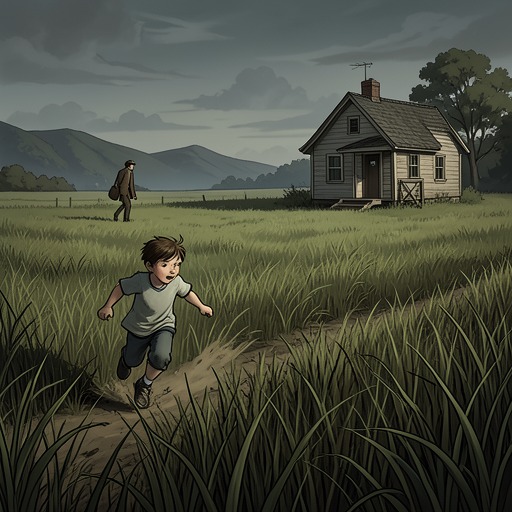
While Susan was in hospital, her siblings Maggie and Pat McManus worked to find her a school nearer to Ballinamore, where they could help her. Beaghmore and the bog of Cloone and Carrigallen were too far away. Aughawillan offered a permanent teaching position at a two-teacher school on a hill, while a house and farm were for sale at Corramahon, no more than a ten-minute walk from the school. Garradice Halt lay between the house and the school, with trains to Ballinamore. The landscape therefore joined work, home, family assistance, and transport within a compact rural area.
The school stood beside the road at the top of the hill. It had two classrooms and a connecting porch where coats, brooms, basins, and buckets were kept. Behind it, a field sloped down into two playgrounds divided by a wall; dry lavatories stood in the middle, and the wall also separated the infants’ and girls’ areas from the boys’ playground. Thick whitethorn hedges enclosed the grounds, broken by ash and oak above earthen banks and a deep drain. The school was not merely a post for Susan: its hill, path, rooms, and playgrounds became part of the children’s daily geography.
A Home Reassembled
Susan first saw the new home after she was allowed out of hospital for a few days. She travelled alone by train to Dromod and stayed with Maggie and Pat in their shop in Ballinamore. The visit was too short for her to go to the barracks; she feared it would be too hard to leave once there. Her husband did not travel the eighteen miles from Cootehall to see her. When she returned to hospital, she wrote about the visit, while the arrangement of her new life remained in motion around her.
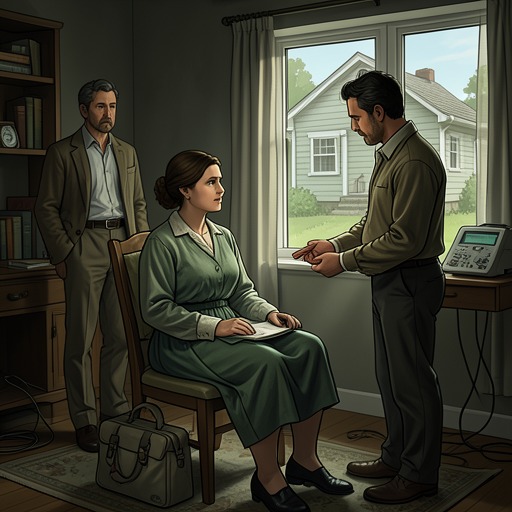
On the morning the school reopened, Pat drove Susan to the priest’s house in Aughawillan. He had insisted that an unofficial five-pound offering be made to secure the appointment. Susan signed the necessary forms, then went to teach, intending to put a substitute in her place before returning to the hospital for further treatment. Her brother and sister’s practical support stood behind the school appointment, while the house at Corramahon offered the possibility of a family home close by. Her husband bought the farm and house without communicating the decision to her. The purchase was largely paid for when he sold his homeplace at Gowna.
At first Susan and John occupied the house without the rest of the family. Their walk to Ollarton’s for milk passed Brady’s pool, the Mahon brothers’ houses, and a deep quarry, then turned at the railway bridge and continued past an avenue of trees and a small lake. Back at the house, they fed the fire with sticks, made tea and bread with jam, and knelt to say the Rosary. The house was a poor, exposed building in the middle of a field; in the child’s experience, however, that evening made it seem like one of heaven’s mansions. The scene binds the landscape’s material spareness to the security Susan’s presence gave it.
That brief life alone with his mother ended when the others arrived from the barracks in a small red turf lorry. Bridgie McGovern rode in the cab with baby Dympna, while Breedge, Rosaleen, Monica, and Margaret came among the crates, beds, furniture, and household goods. Susan kissed each child and took Dympna from Bridgie. Their father was absent on duty. The arrival restored the family’s lost world to the frail house, but its togetherness was temporary.
The Daily Route and Its Disruptions
The walk to Aughawillan School made the surroundings familiar through repetition. The children passed Brady’s pool and house, the home of the old Mahon brothers, the quarry, the railway bridge, and Mahon’s shop before climbing the hill. Others joined them on the way. On many mornings Susan opened the school herself because Master McMurrough was late. The children carried lunches of buttered bread and jam and small bottles of milk; their dark-blue school bags had been made from decommissioned police trousers. Details of work and clothing place the family’s ordinary routine within the modest means of rural life.
Susan’s presence shaped the school as well as the walk to it. When she first visited, the classroom was dusty and the children stared at her in awe; later it was clean, with jam jars of wild flowers on the windowsills. She gave pupils small tasks and used a rod, on rare occasions, chiefly as a warning or a rebuke. Her son experienced the complication of having his mother as a teacher: affection and home life entered the classroom, but so did the constraint of being both her child and one of her pupils.
The route also brought absence and conflict into view. During one visit, the father who had not seen the children in weeks appeared silently beside John and Eddie while they were kicking potatoes over the whitethorn hedge. He began by condemning them, and the two finished gathering the small potatoes in silence. The interruption made the father’s distant authority suddenly present in the children’s adopted life at Aughawillan. When Susan later returned with a new baby, the familiar walk resumed with five children beside her, while Dympna and the baby were cared for by Katie McManus.
Departure, Death, and Afterlife in Memory
As Susan’s illness worsened, the household was moved back to the barracks. The transfer was organized while she was still alive: Margaret and Monica went to school as usual while the others were taken from Corramahon in a lorry, and the brown hens were crated for the journey. The passage from home to school, once the pattern of a reunited family’s days, became part of the geography of separation. After Susan died, her coffin travelled from the house along the cinder path and past Brady’s pool and the Mahon brothers’ street, across the railway bridge, and up the hill past Mahon’s closed shop to the church. The school and its approaches remained on the route between family home and burial.
For years John wanted to return to his mother’s grave but feared facing Aughawillan again. When he eventually travelled from Cootehall, he cycled to Drumshanbo, continued by train to Ballinamore, and went to Maggie’s shop. He and Maggie burst into tears when they greeted each other. That evening Pat accompanied him to the grave. The visit joined a concrete return to the place with an encounter he had long found difficult to imagine.
The later memoir makes Aughawillan more than a setting left behind. John recalled the lanes, the school route, and the house as part of the life he had shared with his mother; when work in the fields was done, memories of walking those roads or sitting by the fire could return as if in a dream. The promise that he would one day say Mass for her helped him resist his father’s attempt to take him out of school, even though he ultimately followed a different vocation. In old age, a visitor recalled that no stone remained of the house: the place looked like nothing but a field. Its physical disappearance sharpens the memoir’s contrast between a home erased from the landscape and a childhood attachment that continued to shape the narrator’s life.